

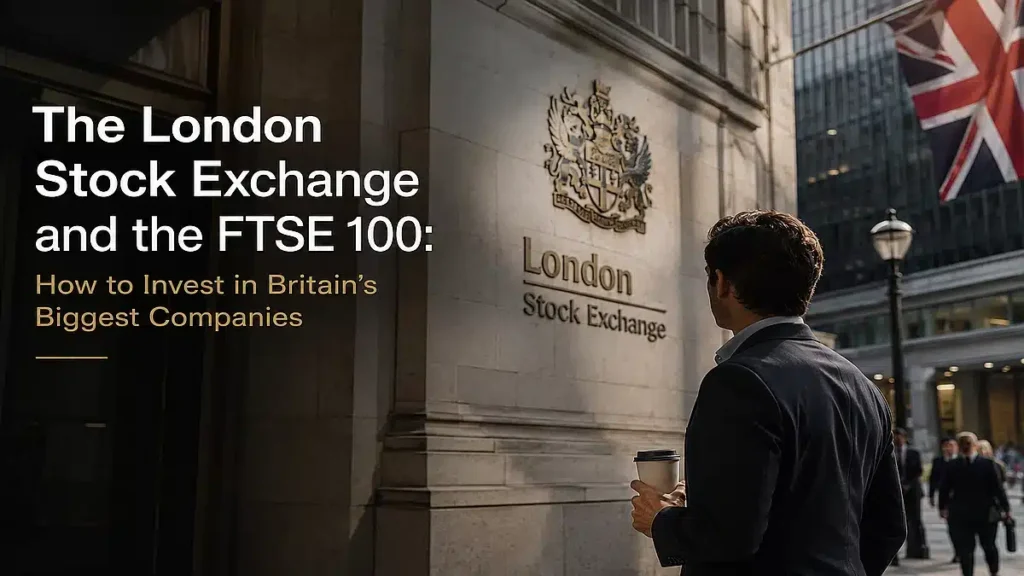
The London Stock Exchange (LSE) acts as a gateway to investments in Britain’s most prestigious companies. As the financial heart of the United Kingdom, the Exchange offers vast opportunities for investors seeking to harness the power of the UK’s biggest brands. Its global relevance also attracts international attention, making it one of the most influential financial centers in Europe and beyond.
One key component is the FTSE 100, an index reflecting the 100 largest companies listed on the LSE by market capitalisation. Understanding how to navigate these waters can empower your investment strategies and potentially yield significant returns. The index also serves as an important indicator of economic confidence, market trends, and the overall performance of major British corporations across different industries.
Understanding the London Stock Exchange
The LSE is more than just a marketplace; it’s a dynamic hub of international financial activity. As one of the oldest stock exchanges globally, it boasts a rich history and offers access to a vast array of financial instruments. From equities to bonds, it provides a platform for companies and investors to engage in trading and long-term capital growth opportunities.
In the post-Brexit era, the London Stock Exchange has maintained its status as a vital player in global finance. The LSE’s methods have adapted to accommodate changing regulations, ensuring it remains competitive. This adaptability reassures investors, both local and international, of its ongoing relevance. In the face of geopolitical shifts, the LSE’s resilience underpins its continued promise as a fertile ground for financial growth.
How the FTSE 100 fits into the LSE
The FTSE 100, often dubbed ‘Footsie’, is central to the LSE’s appeal to investors. Comprising the top 100 companies by market cap, it serves as a benchmark for the UK economy. Industries ranging from finance to pharmaceuticals are represented, offering a cross-section of the economic landscape. The index is regularly re-evaluated, ensuring only the top performers maintain their places.
Investing in the FTSE 100 is akin to investing in a piece of the British economy. Though it primarily reflects blue-chip firms, its diversity provides a stable base that can withstand economic fluctuations. The changing composition of this index not only provides direct exposure to high-performing sectors but also reflects broader market trends, making it a valuable indicator for strategic investment decisions.
Strategies for investing in Britain’s biggest companies
Investment strategies focusing on British companies should balance local insight with global trends. The LSE offers numerous options, from direct equity purchases to exchange-traded funds (ETFs) that track the FTSE 100. Each comes with its benefits and considerations. Direct stock investments allow for more control and potentially higher returns, while ETFs provide diversification and ease of management.
For those wary of individual stock volatility, collective investment schemes like mutual funds provide an alternative route. These funds, operated by managers with expertise in the UK market, offer a diversified portfolio of British equities, often with a focus on those listed in the FTSE 100. For foreign investors, these funds present a managed way to enter the UK market, negating the need for intimate local knowledge.
Navigating regulations and market trends
Investment in UK companies necessitates compliance with local regulations. Investors must navigate both domestic policies and international considerations, such as tax treaties. The London Stock Exchange is known for its regulatory transparency, though staying updated on shifts in financial laws is crucial to safeguard assets and optimise returns.
Market trends also play a crucial role in shaping investment strategies. Awareness of economic indicators within the UK, such as inflation rates and employment statistics, informed decisions on when and what to invest in. Furthermore, global events, such as US interest rate changes or Chinese market performance, may have ripple effects on British stocks, impacting FTSE 100’s dynamics.
Conclusion on investing in Britain’s financial giants
Embarking on an investment journey within the UK offers diverse possibilities. The London Stock Exchange, along with the FTSE 100, provides a robust platform for accessing Britain’s most influential corporations. This dynamic arena requires a deep understanding of both markets and regulations. However, with thorough research and strategic planning, investors can harness these tools effectively.
Ultimately, the key to flourishing in this space lies in combining local know-how with a global perspective. As economic landscapes continue to evolve, those positioned with foresight and strategic intent can benefit most from the opportunities British investments entail. Whether through direct equities or collective vehicles, the UK market remains an enticing proposition for those seeking growth and security in equal measure.
A further advantage of investing in leading British companies is the diversity available across sectors such as finance, energy, healthcare, consumer goods, and technology. This variety allows investors to balance risks while gaining exposure to businesses with strong international influence. In many cases, these corporations generate revenue globally, reducing dependence on the domestic economy alone.