

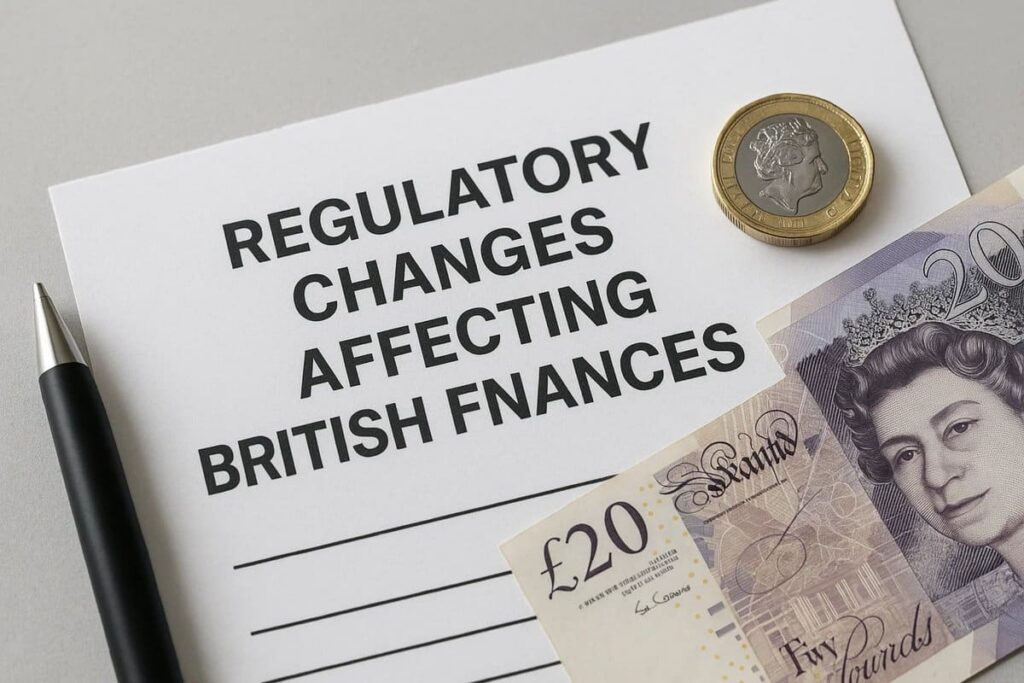
In recent years, regulatory shifts have significantly impacted British finances. Changes in financial regulations aim to foster stability and restore confidence in the system after global and regional turbulences. These transformations have not only affected institutions but have also influenced individuals in the UK, from investors beset with new compliance measures to everyday consumers navigating a landscape of altered banking practices.
Modernising the framework
The financial regulatory environment in the UK has undergone substantial modernisation. Brexit has played a pivotal role in redefining the economic landscape, causing the UK to revise its frameworks to ensure relevance and efficiency outside the EU. The government has introduced new legislations that address the independence of UK markets, enhance consumer protection, and uphold international competitiveness.
Under these evolving laws, financial institutions face the challenge of compliance while ensuring innovation. Regulations like the Senior Managers and Certification Regime (SMCR) aim to enforce accountability among financial services representatives, aligning their actions with both national expectations and global norms.
Impacts on consumers and businesses
The ripple effects of these regulatory shifts reach beyond financial entities, permeating everyday financial activities. Consumers are witnessing changes in how personal data is managed, with enhanced privacy protocols and secure transactions becoming a norm. This evolution not only mandates transparency but also empowers consumers with greater control over their financial interactions.
While these transitions may initially appear as hurdles, they offer long-term benefits such as increased trust and security—all essential components in a well-functioning market. As systems become more refined and responsive to users’ needs, both consumers and businesses are likely to benefit from improved financial services and products tailored to a conscientious market.
Future perspectives and concluding thoughts
The future of British financial regulations seems set on a path of continuous evolution. The government’s commitment to a flexible yet stringent regime underscores a proactive approach in nurturing financial resilience. As technology and innovation forge ahead, the UK’s financial landscape must keep pace, integrating advancements while upholding ethics and responsibility.
In conclusion, staying informed and adaptable amidst these regulatory transformations remains crucial for individuals and institutions alike. By aligning with these new standards, the UK can sustain its status as a vital player on the global financial stage, ensuring that its economic health remains robust and progressive.
👉 Interested in the topic? You may also be interested in: The Role of Automation in Personal Financial Management.